


Viv Home Care
3.852.00 Reviews
App Specs
- Version
- 2026.8.0
- Updated On
- License
- Free
- Downloads
- 10,000+
- Developer
- Viv Technologies Inc.
- Categories
- Medical
- Platform
- Android
Screenshots
 Analysis by AppCompare
Viv Home Care is a medical app from Viv Technologies Inc. that aims to make home care more manageable through technology. My first impression was that it is less about entertainment or quick self-service and more about fitting into an ongoing care routine. That distinction matters: an app can feel useful during the first few days, yet become another icon that nobody opens once the initial curiosity disappears.
In my experience, the most convincing reason to try it is its focus on care at home. That makes it relevant to people coordinating support for a family member, people receiving care themselves, and caregivers who want a more organized digital point of contact. It is free, rated for Everyone, and available for devices running at least iOS or Android version 10, which removes some common barriers to trying a medical tool.
I would still approach it with the right expectations. Viv Home Care is not a replacement for a clinician, an emergency service, or a complete medical record system. Its value depends on how well it fits the real routine around a person’s care. If opening the app helps that routine stay clearer and more consistent, it can earn a lasting place. If it adds another step without reducing confusion, its novelty will fade quickly.
What the first week feels like
The first week is when the idea behind Viv Home Care is easiest to appreciate. Home care often involves small details spread across conversations, appointments, reminders, and changing needs. A dedicated medical app can feel more appropriate than relying on scattered notes, ordinary messaging, or memory alone. The appeal is not simply that the information is digital; it is that a care-focused tool gives the routine a more deliberate home.
I found the strongest early use case to be shared responsibility. Imagine an adult child helping a parent from another home. During the first few days, the app can become part of a planned check-in: the parent uses it as part of the care process, while the family member uses the resulting routine to stay engaged. The benefit is practical rather than dramatic. Fewer details have to be reconstructed from memory after a busy day, and conversations can begin with something more concrete than “How is everything?”
That scenario also shows why setup should be treated as a care task, not a casual download. The person receiving care may not be the person most comfortable with smartphones. I would install it when both people have time, agree on who will use it, and decide what the app should help with. A rushed setup can create frustration before the app has had a fair chance.
The current version is 2026.7.2, so anyone considering it should make sure the installed copy is current before judging the experience. In a medical context, keeping an app updated is not just about seeing a new interface. It is part of making sure the tool being used is the one the developer currently supports.
Worth Reading Before You Choose

Flipboard Shows What News Apps Must Do Beyond the Feed

Switching to Android Auto Means Rethinking Your Driving Routine

Google Calendar Makes a Crowded Week Easier to Manage

Ludo King Makes the Most of the Minutes Between Plans

Baby Panda World Brings Quick Play to Modern Phones, but Its Game Library Feels Busy

ESPN’s Live Game View Makes Following Close Games Easier
Viv Home Care has a 3.8 average from around 120 ratings, with just over 50 written reviews. I read that overall signal as mixed but useful: enough people have tried it to show that it is not an entirely untested idea, while the rating also suggests that the experience will not be equally smooth for everyone. I would not choose it solely because it is free, but the lack of a purchase cost makes a careful trial reasonable.
Who benefits most at the beginning
The best early candidates are people whose home-care routine already has some structure. A caregiver who checks in at a similar time each day, a family member coordinating support, or a person who wants a dedicated care tool is more likely to notice value than someone looking for a general health encyclopedia. The app makes more sense when it is attached to an existing responsibility.
It may be less suitable for someone who wants instant medical answers. Viv Home Care should not be treated as a substitute for professional assessment, especially when symptoms are urgent, severe, or changing quickly. In those situations, contacting an appropriate healthcare professional is more important than trying to make an app provide certainty.
I would also be cautious about giving it to a person who strongly dislikes digital routines. A medical app cannot solve every access problem. If a user finds smartphones confusing, a paper plan supported by regular human contact may be more effective. The right tool is the one that people can actually use consistently, not necessarily the one with the most modern presentation.
Small workflow choices that improve the trial
One useful habit is to define a single purpose for the first week. Instead of expecting the app to transform every part of home care immediately, I would use it around one recurring need and observe whether it reduces effort. This makes it easier to tell whether the app is helping or merely adding another place to look.
A second tip is to agree on what counts as a completed check-in before several people begin using it. In family care, vague expectations can create unnecessary messages: one person assumes an action was recorded, while another assumes it still needs attention. A short conversation about responsibilities can prevent the app from becoming the source of the very confusion it was meant to reduce.
A third is to review the routine at the end of the week rather than judging it after one successful day. Medical care rarely follows a perfect schedule. A tool earns trust when it remains understandable on a tiring day, when somebody is away from home, or when the normal person handling the routine is unavailable.
Whether it still earns attention after the first month
The month-to-month test is more demanding than the first-week test. Initial interest can make almost any new app feel useful. Long-term value comes from reducing repeated friction. For Viv Home Care, that means asking whether it helps people maintain a care pattern without requiring constant enthusiasm.
I see its recurring value in three possible areas: continuity, coordination, and visibility. Continuity means the care routine does not depend entirely on one person remembering every detail. Coordination means family members or caregivers have a clearer basis for deciding what needs attention. Visibility means changes in the routine are easier to notice than they would be when information is scattered across calls and handwritten notes.
Those benefits are strongest when the same people use the app regularly. If one person uses it while everyone else continues with separate notes and messages, the app may become an isolated record rather than a shared aid. Before adopting it, I would decide who is actually responsible for checking it and how often. A tool without an owner tends to become background noise.
There is also a useful trade-off between consistency and flexibility. Home care needs predictable habits, but real life includes travel, appointments, fatigue, and unexpected changes. I would not build a routine that assumes every day will look identical. A better approach is to keep the normal process simple and have a clear human fallback when the normal process cannot happen.
For a person managing their own care, the app may feel more valuable when it supports independence rather than replacing personal judgment. For a family caregiver, its value may come from reducing repeated explanations. For a professional or organized home-care arrangement, the usefulness depends on whether the app fits the existing workflow rather than forcing people to maintain two systems.
How it compares with ordinary alternatives
The obvious alternatives are paper notebooks, calendar reminders, phone calls, text messages, and general note-taking apps. Paper is often easier for someone who is not comfortable with technology, and it remains available without a charged phone or a learning curve. A calendar is excellent for simple reminders but is not designed around the broader context of home care. Messaging is immediate, yet important information can disappear into long conversations.
General health apps may offer broader educational material or tracking categories, but that breadth can be a disadvantage when the real need is a focused home-care routine. Viv Home Care’s more specific identity is its main reason to choose it over a generic organizer. I would prefer it when the care relationship itself is the center of the task, not when I simply want to count exercise, read health articles, or record an isolated measurement.
The trade-off is that a specialized app may be less useful outside its intended context. If your needs are mostly appointment dates, a normal calendar may be faster. If you need formal clinical documentation, a professional medical-record solution may be more appropriate. If the care situation involves several organizations with different systems, checking whether Viv Home Care fits that existing arrangement should come before making it the main record.
This is also why I would avoid treating the app as the only source of truth during important care decisions. A digital routine can support communication, but it should not encourage someone to delay professional help or assume that a recorded item proves a medical issue is under control.
The maintenance work people underestimate
Every care app has a maintenance cost, even when it is free to download. Someone has to remember to open it, keep the routine understandable, correct mistakes, and explain it to another person when responsibilities change. That work is easy to overlook during installation because the first setup feels like the main task.
My practical recommendation is to assign a weekly review to a specific person. The review does not need to become a long meeting. It can simply ask whether the current routine still reflects reality, whether the intended user is comfortable with it, and whether anything has changed in the household. This is particularly important when a family member temporarily takes over care.
It is also worth keeping the app’s role narrow enough to remain sustainable. If every small health concern is pushed into it, the routine can become tiring and difficult to interpret. A focused workflow is easier to maintain than an ambitious one that tries to capture every detail of daily life.
Device maintenance matters as well. The minimum operating-system requirement is version 10, so older phones may not be suitable. Before asking an older relative to depend on the app, I would check the device, battery habits, comfort with updates, and access to the account used during setup. These are ordinary details, but they often decide whether a medical app remains usable.
Where fatigue begins
The first source of fatigue is repetition without a visible payoff. If users perform the same actions but cannot see how those actions improve coordination or understanding, motivation will drop. This is not unique to Viv Home Care, but it is especially important in home care because the people involved may already be tired or managing several responsibilities.
The second is divided attention. A caregiver may be using the app while preparing food, arranging transport, or helping with another task. Any workflow that requires too much concentration at the wrong moment can feel burdensome. I would use it during a calm, predictable part of the day rather than treating every interaction as something to complete immediately.
The third is uncertainty about responsibility. If two people believe the other person is monitoring the routine, the app can create false reassurance. A simple agreement about who checks what is more valuable than adding more participants without clear roles.
Another possible friction point is emotional. Some people may feel that recording care turns a personal relationship into administration. I would introduce Viv Home Care as a way to support the person, not as a test they can fail. The tone around the app matters as much as the technology. A family member who feels monitored may resist it even if the workflow is technically sensible.
There is a useful way to test for this fatigue: pause the app for a short, planned period while keeping the same care responsibility in place, then compare how easy it is to coordinate. If nothing becomes harder, the app may not be earning its place. If communication becomes less clear or more repetitive, that is evidence of recurring value. The point is not to abandon care, but to judge whether the tool genuinely helps.
Privacy, judgment, and responsible use
Because this is a medical app, I would be deliberate about who can access the device and the account. I would avoid sharing credentials casually, use the phone’s normal security protections, and discuss with family members what information should be visible to whom. These are sensible precautions for any health-related tool, especially when more than one person participates in home care.
I would also separate observations from conclusions. A care routine can help people notice patterns, but noticing a change does not automatically explain its cause. If something seems concerning, the next step should be appropriate medical advice rather than trying to interpret the app as a diagnostic authority.
That boundary makes the app more useful, not less. When technology handles organization while people and clinicians handle judgment, each part has a clearer job. Problems arise when a convenient digital record is mistaken for a complete clinical assessment.
My long-term verdict on Viv Home Care
After looking beyond the first-week appeal, I think Viv Home Care is worth trying for people who genuinely need a more focused way to support care at home. Its strongest quality is its specific purpose: it is not asking to become a general-purpose lifestyle tracker. The free price and Everyone age rating make experimentation accessible, while the medical focus gives the trial a practical reason.
Its lasting value will depend less on novelty than on routine design. I would keep it if it reduces repeated explanations, helps a family coordinate responsibilities, or gives a person receiving care a clearer sense of structure. I would stop using it if it becomes another obligation, if nobody knows who is responsible for checking it, or if a simpler paper or calendar system handles the actual need better.
The developer, Viv Technologies Inc., presents the app as a technology-led approach to home care, but I judge it by a more grounded standard: does it make ordinary care easier to sustain? That is a higher bar than a promising first impression. A useful medical app should still make sense on an uneventful Tuesday, after the setup excitement has gone and the people using it are simply trying to get through the day.
My recommendation is therefore measured rather than universal. Try Viv Home Care when the care situation is recurring, shared, and suited to a dedicated digital routine. Set one clear purpose, involve the person who will actually use it, and review after several weeks whether it is saving effort. Choose a simpler alternative when the need is only a basic reminder or when the intended user is more comfortable with paper and direct conversation.
The real test is not whether Viv Home Care looks useful on installation day, but whether it quietly removes friction from care month after month. For the right household, that quiet consistency can justify keeping it. For everyone else, recognizing that a different tool fits better is just as valuable a conclusion.
Pros
- Simple interface makes daily care tasks easy to organize.
- Supports coordination between family members and caregivers.
- Helpful reminders can reduce missed appointments or care routines.
- Centralized care information can improve communication.
- Useful for keeping track of ongoing support at home.
Cons
- Some features may require an account or caregiver invitation.
- App usefulness depends on everyone keeping information updated.
- Not a replacement for emergency medical assistance.
- Privacy settings should be reviewed before adding sensitive care details.
- Compatibility and available features may vary by care provider or region.
FAQs for Viv Home Care
What is Viv Home Care, and who is it designed for?
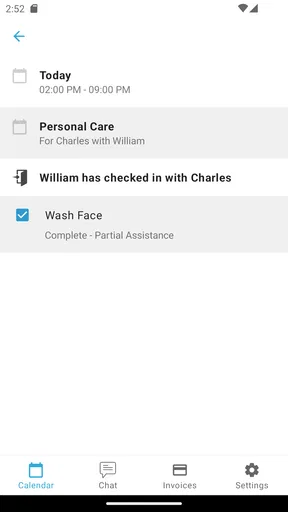
Viv Home Care is a care-management application intended to help coordinate support for people receiving home-based care. Depending on the service provider, it may assist clients, family members, caregivers, and care coordinators with schedules, appointments, care updates, communication, and daily tasks. Before downloading, check whether your home-care organization supports the app and which features are available for your account.
How do I create an account and sign in to Viv Home Care?
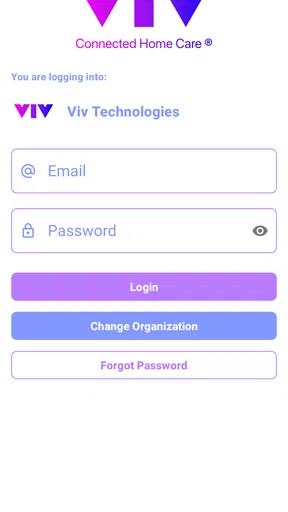
Access to Viv Home Care may depend on an invitation or registration provided by your care agency, employer, or service coordinator. After installing the app, you may need to enter an email address, phone number, password, or organization-specific details. If you cannot sign in, confirm that your invitation is active and contact the provider directly, since ordinary app-store installation may not automatically create access.
What information can be managed through Viv Home Care?
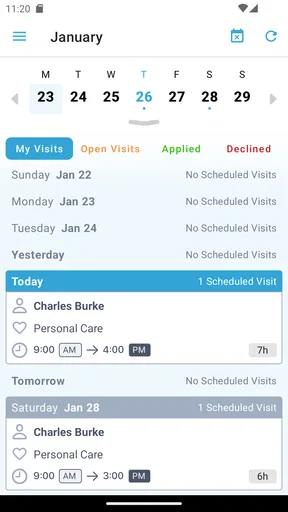
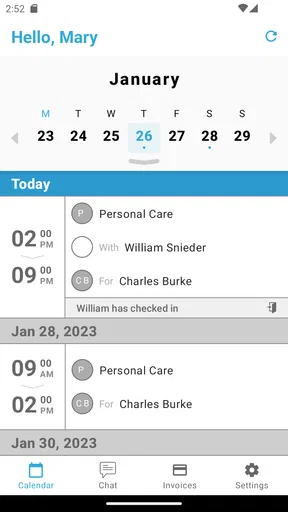
The information available in Viv Home Care can vary according to the organization using the platform and the user’s role. Typical functions may include viewing care schedules, checking visits, receiving updates, communicating with care staff, recording notes, or reviewing support-related information. Because care records can be sensitive, users should review the app’s privacy policy and avoid sharing login details with other people.
Is Viv Home Care suitable for emergencies or urgent medical situations?
Viv Home Care should not be treated as a replacement for emergency services, a doctor, or an urgent medical helpline. The app may support routine communication and care coordination, but messages could be delayed and staff may not monitor the platform continuously. If someone is in immediate danger or needs urgent medical attention, contact the appropriate local emergency number or healthcare service instead.
Does Viv Home Care work on both Android and iPhone, and does it require internet access?
Availability can depend on the specific Viv Home Care version, region, and organization providing the service, so users should confirm compatibility in the official Google Play Store or Apple App Store listing. Most care-management features require an internet connection to synchronize schedules, messages, and updates. If connectivity is interrupted, some information may not refresh until the device reconnects.


